Complete Buying Guide for Soap Making Machine Line
1. Introduction to Soap Making Machine Line
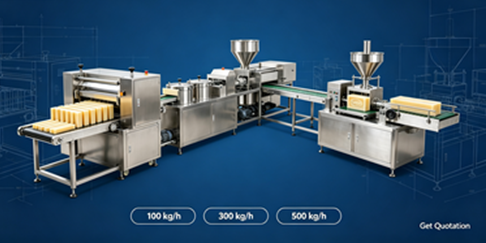
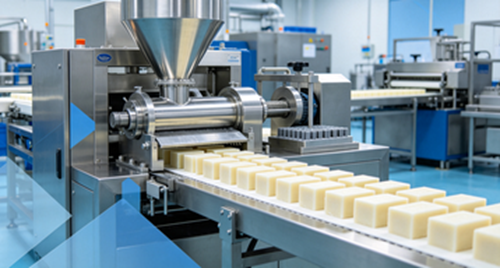
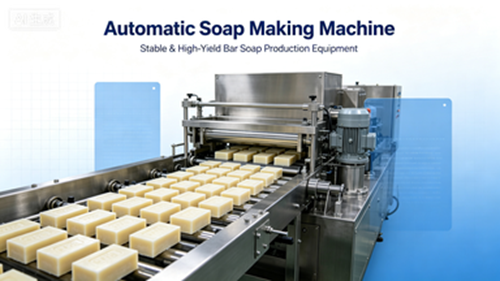
A soap making machine line is a complete integrated production system that automates the entire soap manufacturing process, from raw material mixing, refining, extrusion, cutting, stamping to finished product output. Unlike single standalone soap machines, a full soap making machine line features matched equipment, stable production logic, and consistent finished soap quality, which is the core equipment for commercial laundry soap, toilet soap, and hotel soap mass production.
In actual industry operation, many startup manufacturers make mistakes by mismatching line capacity, selecting inferior material configurations, or ignoring supporting system compatibility, resulting in low yield, frequent line downtime, and high production costs. Based on 8 years of on-site equipment debugging and overseas project service experience, this guide shares real industry data and practical purchasing skills to help buyers select a cost-effective and durable soap making machine line.
2. Main Types of Soap Making Machine Line
According to automation level and production scale, commercial soap making machine line is mainly divided into semi-automatic and fully automatic models, which adapt to different startup and mass production scenarios:
2.1 Semi-Automatic Soap Making Machine Line
This type of soap making machine line is tailor-made for small workshops, family factories and startup businesses. It supports two core hourly output models: 50 kg/h and 100 kg/h, covering ultra-small and small-batch production demands. The semi-automatic soap making machine line requires manual auxiliary feeding, with automatic material mixing and three-roller refining. For laundry soap production, it is equipped with a manual cutting machine for flexible soap sizing and batch cutting. For toilet soap processing, it adopts a semi-automatic soap stamper printer to finish surface logo embossing and pattern printing. Featuring ultra-low investment, compact floor space and flexible formula adjustment, this line delivers stable daily output and is the best entry-level soap making machine line for new market entrants.
2.2 Fully Automatic Soap Making Machine Line
The fully automatic soap making machine line is designed for medium-to-large soap factories and commercial mass production, with four standardized hourly capacity options: 300 kg/h, 500 kg/h, 1000 kg/h and 2000 kg/h. This full-process integrated line realizes automatic feeding, continuous vacuum refining, homogenization and extrusion. For laundry soap production, it is equipped with a high-precision fully automatic cutting machine to achieve fixed-length, fixed-weight cutting without manual intervention. For high-end toilet soap production, it matches an intelligent fully automatic soap stamper printer for one-step logo embossing, pattern molding and surface finishing. The entire soap making machine line only requires 1–2 on-site monitoring workers, with finished soap consistency rate up to 99.5%, supporting stable, high-volume commercial operation.
3. Core Specifications & Configuration Comparison (With Real Industry Data)
Parameter matching is the key to purchasing a qualified soap making machine line. Improper configuration will directly affect production efficiency and service life. The following table sorts out the authoritative and practical parameters of two mainstream soap production line models, covering capacity, power, material, size and core indicators:
|
Specification Item |
Semi-Automatic Soap Making Machine Line |
Fully Automatic Soap Making Machine Line |
|
Hourly Production Capacity |
50 kg/h, 100 kg/h |
300 kg/h, 500 kg/h, 1000 kg/h, 2000 kg/h |
|
Main Contact Material |
304 Food-grade Stainless Steel |
304/316 Custom Stainless Steel |
|
Working Voltage |
220V/380V Customizable |
380V Industrial Standard |
|
Core Supporting Equipment |
Laundry Soap: Manual Cutting Machine Toilet Soap: Semi-Automatic Stamper Printer |
Laundry Soap: Full-Automatic Cutting Machine Toilet Soap: Full-Automatic Stamper Printer |
|
Applicable Products |
Laundry Soap, Common Multipurpose Soap |
Laundry Soap, Toilet Soap, Hotel Soap, Essential Oil Soap |
|
Required Operators |
2–3 Workers |
1–2 Monitoring Workers |


First-hand Experience Tip: Never accept carbon steel instead of 304 stainless steel for material contact parts. Carbon steel is easy to rust and corrode soap paste, causing product deterioration and shortening the soap making machine line service life by more than 40%. For high-end essential oil soap production, it is recommended to upgrade to 316 stainless steel to avoid chemical reaction pollution.
4. Key Purchasing & Supplier Selection Tips
A high-quality soap making machine line depends not only on equipment configuration, but also on reliable suppliers. Summarizing years of overseas service experience, the core selection standards are as follows:
First, prioritize manufacturers with physical factories and overseas installation cases. Avoid trading companies without production capacity, which cannot guarantee after-sales maintenance. Second, ask suppliers to provide real machine test videos and finished soap samples, not only promotional renderings, to verify the actual operation effect of thesoap making machine line. Third, confirm the warranty period of core components (refiner, extruder, stamping machine), and require 12–24 months official warranty and quick spare parts delivery service to prevent production line shutdown.
5. FAQ About Soap Making Machine Line
Q1: Can one soap making machine line produce multiple types of soap?
A: Yes. A standard universal soap making machine line supports flexible switching of formulas and molds. By adjusting raw material ratios and replacing different stamping molds, it can produce laundry soap, toilet soap, hotel disposable soap and multipurpose soap, with strong production flexibility.
Q2: What raw materials are suitable for the soap making machine line?
A: The main raw material is industrial soap noodles. It can be matched with auxiliary materials such as soda ash, sodium silicate, pigment, essence and softener according to product positioning. The whole line can automatically mix and refine various raw materials to ensure uniform soap paste texture.
Q3: How long is the installation and commissioning cycle of the soap making machine line?
A: For small semi-automatic soap making machine line (50/100kg/h), the installation and debugging cycle is 3–5 days. For full-automatic lines ranging from 300kg/h to 2000kg/h, the standard commissioning period is 7–10 days. We provide professional remote guidance and door-to-door debugging services to ensure the manual cutting machine, full-automatic cutter, semi-automatic and full-automatic soap stamper printer work perfectly with the whole production line.
Q4: Is the soap making machine line easy to maintain in daily use?
A: Yes. The industrial-grade soap making machine line adopts modular design, with simple structure and low failure rate. Daily maintenance only needs regular cleaning of material contact parts and lubrication of operating parts, and the annual maintenance cost is extremely low.
6. Final Recommendation & Strong Call to Action
Choosing a matched soap making machine line is the first step to stable profit of soap manufacturing business. Startup businesses with limited budget are recommended to choose semi-automatic lines to control risks and test the market; enterprises pursuing large-scale output and long-term brand development must select fully automatic intelligent soap production line to improve product competitiveness.
If you need customized quotation, equipment parameter list, production test video or project solution for soap making machine line, please send your target output, local voltage and product requirements immediately. Our professional technical team will provide you with the most cost-effective equipment scheme and transparent price within 24 hours to help you quickly launch and expand your soap production project!
Soap Making Machine: Types, Capacity & Raw Material Complete Guide
Washing Soap Making Machine: Complete Guide for Small & Industrial Production