How to Distinguish Between Soap Grains and Soap Oil?
For manufacturers in the soap industry, especially those producing laundry bar soap and solid soap, accurately distinguishing between soap grains and soap oil is crucial for selecting the right raw materials and optimizing production processes with the proper soap making machine or laundry bar soap machine. This guide will help you identify these two key components and make informed decisions for your chemical equipment and manufacturing needs.
What Are Soap Grains and Soap Oil?
Soap Grains
Soap grains, also known as soap noodles, are small, granular solid pieces formed during the soap manufacturing process. They are typically produced through a soap making machine via saponification, where fats or oils react with an alkali (usually sodium hydroxide) to create soap and glycerin. These grains have a uniform, dry texture and are the primary raw material for producing solid soap bars, including laundry bar soap. Soap grains are highly pure, with a moisture content usually below 10%, and they serve as the base for further processing into various soap products.
Soap Oil
Soap oil, on the other hand, is a semi-solid or paste-like substance that may contain higher levels of unsaponified oils, moisture, and impurities. It often results from incomplete saponification or as a by-product in some soap-making processes. Unlike the uniform structure of soap grains, soap oil has a softer, more malleable consistency and may have a darker color due to residual organic materials. It is less commonly used for high-quality solid soap production but might find applications in lower-grade soap products or as a feedstock for further refining.
Key Differences to Look For
1. Physical Appearance
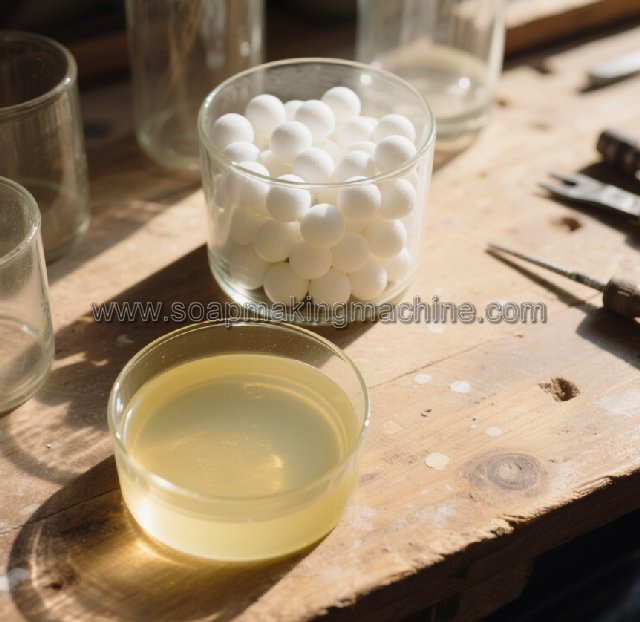
Soap Grains: Appear as small, dry, pearl-like granules with a consistent off-white or light yellow color. They are free-flowing and do not clump together easily. When touched, they feel firm and powdery, with no sticky residue.
Soap Oil: Presents as a sticky, semi-solid mass that may clump or form into irregular shapes. Its color can range from yellowish to darker tones, and it has a greasy or waxy texture. Pressing it with your finger will leave a residue, and it may stick to equipment surfaces during processing.
2. Chemical Composition
Soap grains have a high soap content (usually over 85%) with minimal unsaponified matter (<5%). They are low in moisture and free from significant amounts of glycerin or other by-products, making them ideal for direct use in laundry bar soap machine operations to produce hard, long-lasting solid soaps.
Soap oil contains a lower soap concentration (often 60-80%) and higher levels of moisture (15-25%), unsaponified fats/oils, and glycerin. These impurities can affect the hardness, lather, and shelf life of final soap products, requiring additional refining steps before use in quality solid soap production.
3. Production Process Compatibility
Soap Making Machine Suitability: Soap grains are designed for efficient processing in modern soap making equipment. They can be directly melted, mixed with additives (such as fragrances, colors, or exfoliants), and pressed into bars using a laundry bar soap machine, ensuring smooth production and consistent product quality.
Soap Oil Challenges: Using soap oil in standard solid soap production may require pre-treatment to remove excess moisture and impurities. This can lead to issues like clogged machinery, longer production times, and inconsistent soap hardness. It is more suited for batch processes or specialized applications where purity requirements are lower.
4. End-Product Applications
Soap Grains: The go-to choice for producing high-quality solid soaps, including laundry bars, bathing soaps, and luxury soap products. Their uniformity and purity ensure excellent lathering, cleansing power, and a long shelf life.
Soap Oil: Often used in industrial cleaning products, soft soaps, or as a raw material for soap reprocessing. While it can be converted into solid soap with additional refining, the extra steps increase production costs and complexity.
How to Test and Identify Them
Moisture Test: Place a small sample in a dry container. Soap grains will remain free-flowing, while soap oil may release moisture droplets over time or form a sticky layer.
Melting Point: Heat a sample at 60°C (140°F). Soap grains will melt into a clear, uniform liquid, while soap oil may leave residue or separate into layers due to impurities.
pH Test: Soap grains have a neutral to slightly alkaline pH (around 9-10), while soap oil with excess alkali may show a higher pH, or lower if there are unsaponified fatty acids.
Contact us today to discuss how our solutions can elevate your production process and meet the demands of international buyers. Don't let raw material confusion slow down your business—choose the right equipment for the right materials and start producing soap that stands out in quality and performance!
keywords:soap making machine; laundry bar soap machine; solid soap; chemical equipment
How to make your soap grind finer? The three-roll mill can help you
How to Ensure Product Quality and Hygiene During Soap Production?