
Exported 500PH Toilet Soap Production Line to Indonesia
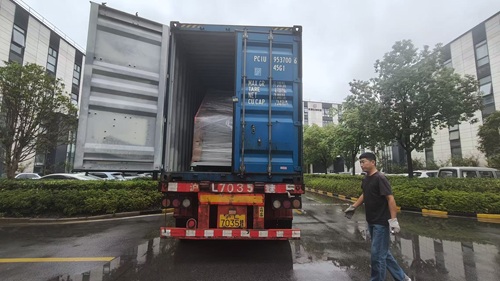
A 500PH toilet soap production line has been exported, delivered and fully commissioned at a soap plant in Indonesia. Built entirely in 304 stainless steel and wired for 380V / 50Hz, the line takes raw soap noodles in at one end and releases finished, stamped toilet soap bars at the other — with no manual handling in between. This article breaks down the full equipment composition, the production flow, and a closer look at each soap manufacturing machine inside this toilet soap production line.
Why a Complete Toilet Soap Production Line Instead of Loose Machines
Many buyers start with a single soap manufacturing machine, then add another later. What we have learned over years of exports is that an integrated toilet soap production line wins on three fronts: synchronized speed, consistent quality, and one-source responsibility — no matter whether you need one soap manufacturing machine or a complete line.
When every stage — mixing, milling, extruding, stamping — is matched to the same hourly capacity and wired into one control system, there is no bottleneck, no pile-up between stations, and no need to coordinate several different suppliers when something needs adjustment. When a duplex vacuum plodder is paired with two-stage roller milling, air pockets and surface cracks are eliminated before they ever reach the finished bar. For our Indonesian customer, choosing a full line meant a single commissioning visit, a single spare-parts list, and one technical contact for the life of the project.
Complete Equipment Lineup of This Toilet Soap Production Line
This 500PH toilet soap production line is a 6-stage continuous system. Every soap manufacturing machine in the line is sized and synchronized to handle the same 500 kg per hour throughput. Here is the equipment in order.
|
Stage |
Equipment |
Function |
|
1 |
Mixer |
Blends soap noodles, fragrance, additives into a uniform mass |
|
2 |
Belt Conveyor 1 |
Carries the mixed mass from the mixer to the first three roll mill |
|
3 |
Three Roll Mill No.1 |
First-stage refining; crushes and kneads the soap into a fine sheet |
|
4 |
Belt Conveyor 2 |
Feeds the refined soap from mill No.1 to mill No.2 |
|
5 |
Three Roll Mill No.2 |
Second-stage refining for maximum smoothness and density |
|
6 |
Belt Conveyor 3 |
Transfers the finished sheet to the duplex vacuum plodder |
|
7 |
Duplex Vacuum Plodder |
De-aerates and compresses the soap into a tight, uniform blank |
|
8 |
Auto Horizontal Stamper |
Presses each blank into a finished, embossed toilet soap bar |
Each Machine in This Toilet Soap Production Line, Explained
From the mixer to the stamper, every soap manufacturing machine in this line is built for continuous, unattended operation. Below is what each unit does.
Mixer
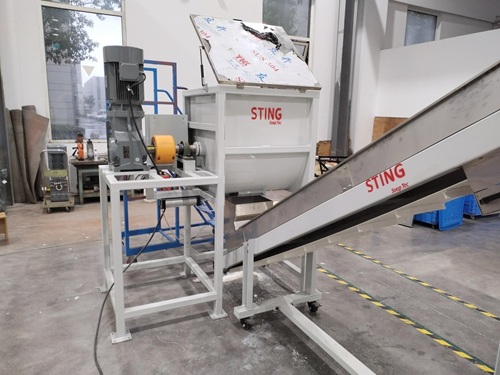
The mixer is the first soap manufacturing machine in the toilet soap production line. Raw soap noodles, fragrance, color and additives are loaded into the stainless-steel drum and kneaded until the whole batch is homogeneous. Once the mass is uniform, the mixer discharges automatically onto belt conveyor 1, keeping the flow continuous so no time is lost between batches.
Belt Conveyor 1 — Mixer to Three Roll Mill No.1
Three Roll Mill No.1
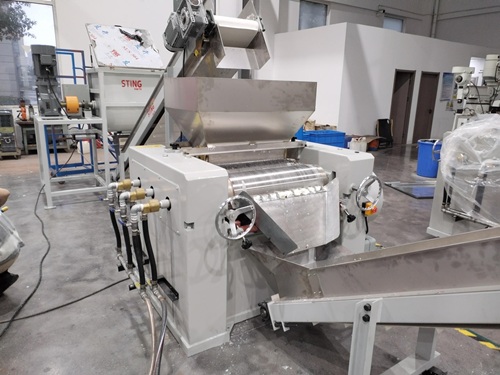
This is the first refining stage. The mixed mass passes through three counter-rotating rollers, which crush and knead it into a fine, continuous sheet. The roller gap is adjustable to control the sheet thickness. Mill No.1 removes the coarse texture left by the mixer and prepares the material for the second, finer pass.
Belt Conveyor 2 — Mill No.1 to Mill No.2
Belt conveyor 2 transfers the refined sheet from the first mill to the second. Its job is simply to move the material cleanly and at a constant speed, so the two mills stay in sync and the sheet arrives at the next stage without tearing or bunching.
Three Roll Mill No.2
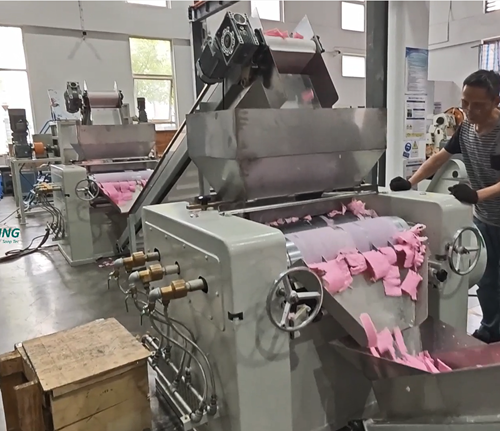
The second three roll mill performs the final refining pass. Running in series after mill No.1, it works the soap to maximum smoothness and density. This two-stage milling is what gives premium toilet soap its ultra-fine, uniform texture — and it is the main reason the final bars come out dense and free of cracks.
Belt Conveyor 3 — Mill No.2 to Duplex Vacuum Plodder
Belt conveyor 3 delivers the finished sheet from the second mill into the duplex vacuum plodder. As with the other belts, its speed is matched to the extruder intake to guarantee a steady, continuous feed.
Duplex Vacuum Plodder
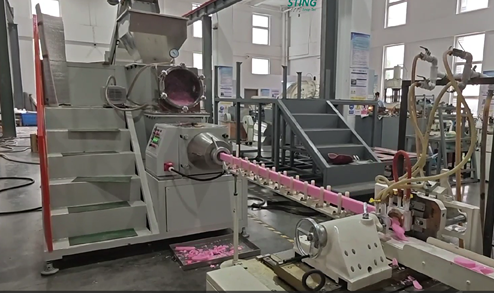
This vacuum soap plodder is the heart of the toilet soap production line, and the most important soap manufacturing machine in the whole line. Inside the vacuum chamber, trapped air is pulled out of the soap, and the twin barrels compress the material into a tight, uniform blank with consistent density. A quality duplex vacuum plodder is what makes the finished bar smooth, dense and free of internal voids — the single biggest quality advantage over manually-run plants.
Auto Horizontal Stamper
In the final stage, each blank is fed one at a time into the stamper, which presses the logo and shape into every bar with identical pressure and depth. The one-at-a-time design means every bar gets the same embossing quality, bar after bar.
How the Toilet Soap Production Line Works — Step by Step
Stage 1 — Mixing
Soap noodles are loaded into the mixer together with fragrance, color and additives. The mixer kneads the batch until the mass is homogeneous, then discharges it automatically onto belt conveyor 1.
Stage 2 — Double-Pass Refining
The mass travels on belt conveyor 1 to the first three roll mill, where it is crushed and kneaded into a fine, continuous sheet. The sheet moves on belt conveyor 2 to the second three roll mill for a second pass. Two-stage milling produces the ultra-fine, uniform texture that premium toilet soap demands.
Stage 3 — Extruding
The refined sheet rides belt conveyor 3 into the duplex vacuum plodder. Under vacuum, trapped air is pulled out and the soap is compressed into a tight, uniform blank with consistent density. This duplex vacuum plodder is the heart of the line — it is what makes the finished bar smooth, dense and free of internal voids.
Stage 4 — Stamping
Each blank is fed one at a time into the one-at-a-time stamper, which presses the logo and shape into every bar with identical pressure and depth.
Key Technical Data
|
Parameter |
Value |
|
Capacity |
500 kg/h (500PH) |
|
Refining |
Two-stage, twin three roll mills |
|
Extruding |
Duplex Vacuum plodder |
|
Stamping |
Auto horizontal stamper |
|
Material |
304 stainless steel |
|
Power supply |
380V / 50Hz |
|
Installed power |
88.59kW |
|
Line length |
18.9m |
FAQ
Q1: What raw material does a 500PH toilet soap production line accept?
It runs on soap flakes, soap noodles or soap base. The mixer and two-stage mills handle standard toilet-soap formulations, and the extruder vacuum level is adjustable to match your recipe.
Q2: Is the whole line 304 stainless steel?
Yes. All contact surfaces on the mixer, roller mills, vacuum soap extruder and stamper are 304 stainless steel, meeting food-contact hygiene standards for toilet soap.
Q3: Can the capacity be scaled up or down?
Yes. The same line architecture is available at 【100 / 300 / 500 / 800】kg/h. The 500PH model you see here is our middle range and the most exported configuration.
Let's Build Your Toilet Soap Production Line
Whether you need a single soap manufacturing machine or the full 500PH toilet soap production line, built around a duplex vacuum plodder and two-stage roller milling, this is a proven, export-tested configuration for Indonesia, Africa, the Middle East or Latin America. Send us your target capacity, your bar size, and your soap formulation, and we will reply with a full equipment list, layout drawing and quotation within 1 working days. Contact us for a free consultation today.
1T/H Laundry Soap Production Line Exported to Mauritania | Soap Machine Manufacturer
Related Article


