
The introduction of soap making machines 150-2000 kg/h toilet soap production line
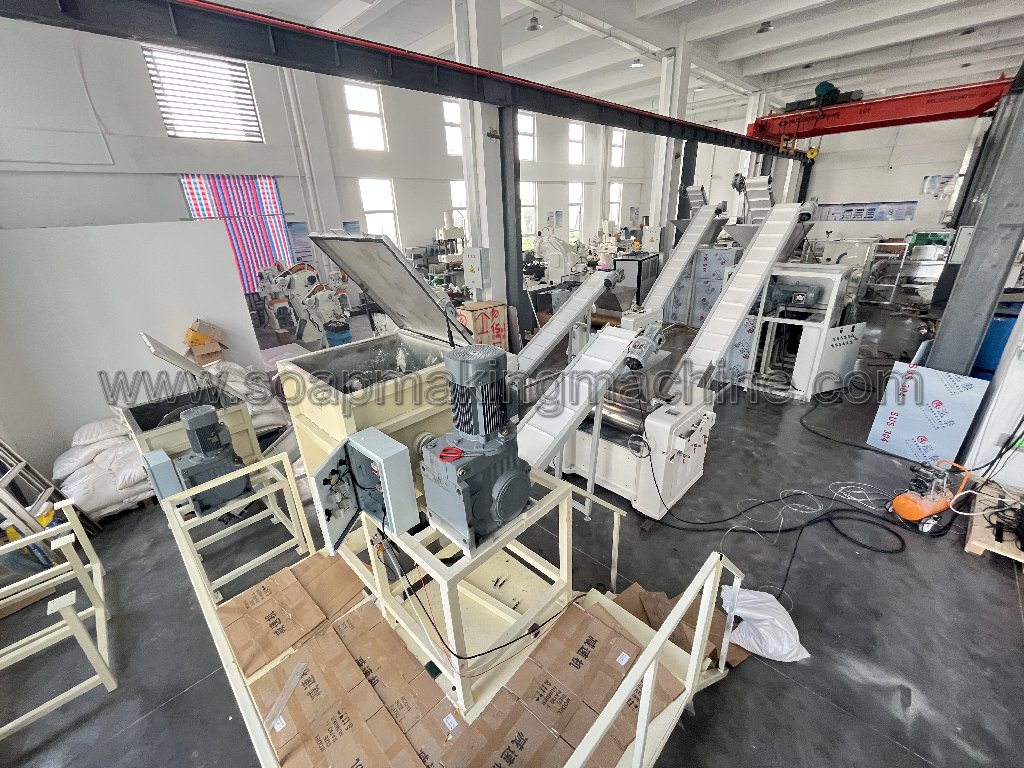
In today's fast-paced hygiene product manufacturing landscape, efficient toilet and laundry bar soap production lines have become essential for businesses aiming to scale operations while maintaining quality. Let's explore the sophisticated process behind modern soap manufacturing machines capable of producing 150-2000kg per hour.
Step.1 Raw Material Preparation
The journey begins with precise ingredient measurement. Automated dosing systems combine fatty acids (tallow, palm oil, or coconut oil), caustic soda (NaOH), and additives like fragrances or antibacterial agents. Advanced mixers ensure perfect chemical ratios for consistent quality batch after batch.
Step.2 Mixing
Used to break and mix the raw material, making the auxiliary material and additives and flavors mix with soap noodles fully, reaching the formulation requirement.
Step.3 Grinding
The homogeneous soap paste then enters a three-roll mill system. This critical stage refines texture through consecutive steel rollers, progressively narrowing gaps to 0.08-0.15mm. And then? Ultra-smooth soap noodles ready for final shaping.
Step.4 Refining and Extruding
The raw materials pass through the upper screw and are further ground and homogenized to make them more uniform. Then they are extruded by the lower screw and are extruded into strips when they reach the outlet.This step is the most critical for making soap. The quality of the equipment directly affects the quality of the final soap. High-capacity vacuum plodders (single or twin-screw) compress the soap mass while removing residual air pockets. The continuous extrusion process forms long rectangular logs with perfect density and moisture content (8-12%), adjustable based on climate conditions.
Step.5 Cutting or Stamping
When making laundry soap, use a Cutter to cut the soap bar into pieces and print the logo on the soap body.Computerized stamping presses transform extruded logs into market-ready bars. Customizable die molds create brand-specific shapes/sizes (50g-200g standard) while high-pressure embossing units imprint logos/text. Quick-change mold systems enable flexible production switching.
Step.6 Cooling and Packaging
When printing, because the soap body is relatively hot, in order to better make the formed soap with the LOGO engraved fall off the mold cavity, frozen water runs by Refrigerator needs to be inserted into the mold body to cool down, so that the soap body shrinks and falls off. The final step is packaging. Options include flow-wrap machines for individual packaging or cartooning systems for bulk packs.
keywords: toilet soap production line,making toilet soap,toilet soap making process
Do you know how to craft a high-quality bar Soap?
How to Choose Soap Production Equipment
Related Article


